
South Asia’s Green Shoots (I): The Jesuit West Zone Indian Provinces Ecology Platform
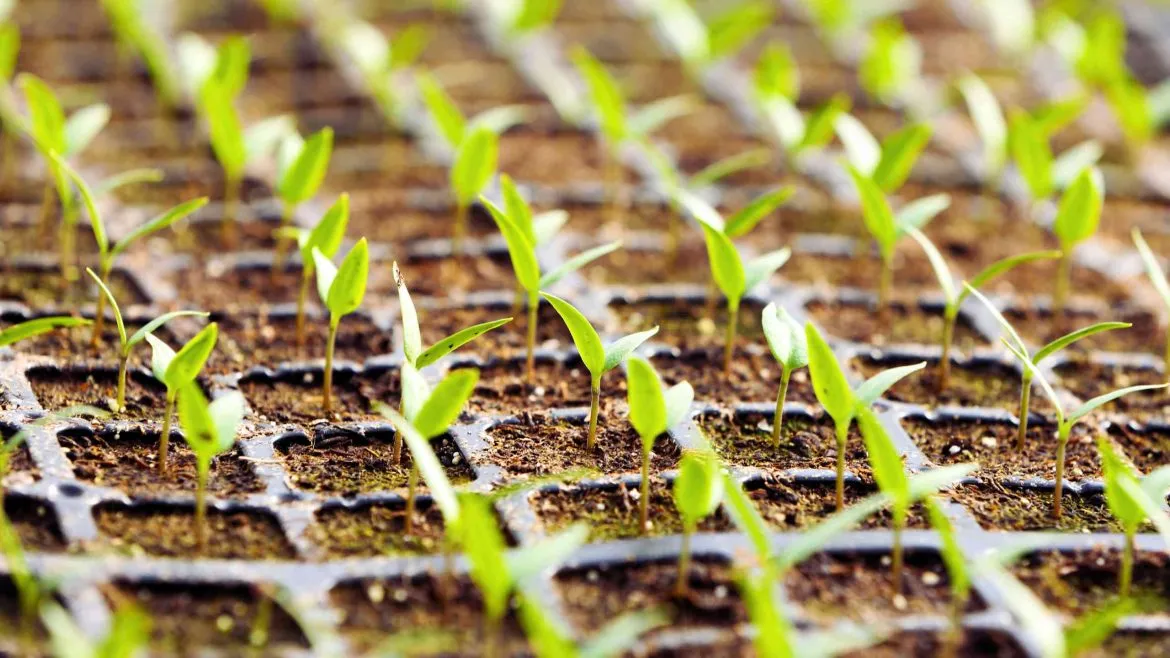
In our recent interview with Fr. John Kennedy, S.J., we highlighted some key initiatives and success stories in South Asia. As we announced at the time, we now begin to explore these stories in greater depth, examining how various communities are embodying the ecological Magis to which we are invited.
We begin this series with the Ecology Platform of the Jesuit West Zone Indian Provinces. This testimony details how Jesuit collaboration is driving concrete responses to the climate crisis: from the transition to 100% solar energy in its institutions, to the implementation of biogas plants in rural areas and joint research in organic farming. Below, we present the progress of this work, as shared by Fr. Frazer Mascarenhas, S.J., Coordinator of the Ecology Platform of the Indian West Zone.
I have spent most of my active life in the ministry of Education, spending 27 years in Higher Education, including 12 years at the helm of our University College in Mumbai and 7 years in School Education. Provincials have a way of making sure the Jesuits under their care do not get bored with what they do and so mine sent me off, at the age of 70, to head the Province Social Action and Ecology activities. I must say that I have re-discovered a passion for the environment in me since then! I subsequently became the Coordinator for the Ecology Platform of the 4 West Zone Provinces of India. I entered the scene after much ground-work had been done by well-qualified EcoJesuits from the Zone. In April 2024, 38 Jesuits and lay partners decided at a meeting in Mumbai, to identify specific Projects that our Provinces could concretely work at for the next 3 years. These were divided into 4 Networks: Communication, Advocacy and Research (CARE), Spirituality, Education, Awareness and Lifestyle (SEAL), Agriculture and National Resource Management (ANRM) and the Renewable Energy Network (REN).
Solar Energy:
REN decided on adopting 100% solar energy at all our Jesuit institutions and residences, as a demonstration to others that renewable energy is viable as an urgent response to global warming which needs that we abandon fossil fuel. Countries like India in the Global South are already feeling the devastating effects of climate change and do not have the finances to manage such disasters which affect the most vulnerable. Government action is insufficient and a grass-roots movement is required to counter the lobbying of the Fossil Fuel industry (coal mines in India are proliferating and coal is being imported from as far away as Australia). The Goa Province had already begun this a few months earlier. Bombay, Pune and Gujarat Provinces also took up the task, motivating schools, colleges and other Jesuit institutions to adopt solar. The German and Austrian Jesuit donor agencies helped with finance – as an excellent example of the international transfer of funds for ecology from the North to the South. A Solar Dashboard was created on the West Zone Ecology Website to monitor progress: https://ecosjwestzone.org/solar-dashboard/. The results are encouraging and the deadline of April 2027 is likely to be met.


Biogas Plants:
Along with solar energy, India’s rural areas also have the possibility of having biogas plants for cooking gas from cow-dung, in order to make the import of LPG cylinders unnecessary and to eliminate the use of firewood (killing 2 birds!). In fact, the slurry from the biogas plant is a very good biofertilizer for farming. The initial installation may be costly but commercial companies have entered to facilitate both installation and digital monitoring of output. Again, the Goa Province had a head start in this area thanks to an initiative of a few Jesuits in the Belgaum area. The Jesuit Shramik Abhivrudhi Sangh (SAS), popularly known as Jana Jagaran (JJ), has been quietly transforming rural lives in the Belagavi and Kolhapur districts since 1978. More than 25,000 biogas cum toilet units have been established, about 650 of them in 2025.


“Women, who once spent hours collecting firewood, now have more time for education, childcare, and income-generating activities. Kitchens are smoke-free, significantly reducing respiratory problems and improving overall family health. The sanitation component has also helped curb open defecation, leading to better hygiene and a decline in waterborne diseases. The initiative not only lowers household expenses but also contributes to forest conservation and environmental protection.” – writes Fr. Santosh Vas S.J.
The Pune Province has joined in the effort in a big way and demonstration units were installed in a Rural Women’s Development Centre, Shrirampur and a Natural Farming Project at Kumbharwadi in Sangamner, followed by the installation of 10 biogas units in Kakanewadi Village, Ahmednagar and another 10 in Kasare Village, Parner. This needs to grow into a movement across all the villages which are influenced by Jesuits.


Isn’t it strange that the temperature of the earth has already reached 1.5 degrees above pre-industrial levels and scientists are predicting eco-genocide if it reaches above 2 degrees, yet people like you and I are closing our eyes and hoping for the best like the proverbial ostrich? Unfortunately, it is the children and grand-children of the present generation who will pay the heavy price of our inaction when avenues are still readily available.
Organic Farming:
It is comforting to know that Jesuits are still reaching for the Magis in new frontier areas where we may not have had a presence. A good example of this is the scientific research on natural and organic farming that two Jesuit centres in the West Zone have initiated, to evolve methods for the microbial enrichment of the soil in organic farming which needs to be as productive as that with chemical fertilizers for farmers to adopt it. The CARE Network has brought together scientists, Jesuit and lay, from the Xavier Research Foundation – Ahmedabad, Gujarat Province and the Prabodhan Centre for Research of MPSM – Nashik, Bombay Province, to share resources, knowledge and experimentation, with the possible outcome of a common set of microbial consortia for use in the zone. Networking can make the crucial difference to Jesuit efforts, in collaboration with those of other groups in the field. Faith will help to spark a creative partnership with nature – so loving created by the divine.

The various Jesuits and their partners in mission across the three Indian States of Goa, Maharashtra and Gujarat are enthused by the results achieved in a short time – building on past efforts, yet realizing the need to hasten effective action. It is the networking among Jesuit institutions that gives hope, as the efforts and results from any one institution seem so inadequate to tackle the task ahead. Together, much can be achieved!
The technology of solar energy, the biogas plant and microbial enrichment of the soil for organic farming, holds great hope for sustainable living. Its adoption by our communities across India is now the limiting factor. This is what Jesuits have specialized in down the centuries and it’s a talent we need to rediscover. The 4th UAP of the Jesuits gives motivation for effective action. Care for our Common Home is not optional – it is critical for human survival and well-being. The mission of the Society of Jesus needs this as a preference and a priority.
by: Frazer Mascarenhas, S.J.
Coordinator, Indian West Zone Ecology Platform
