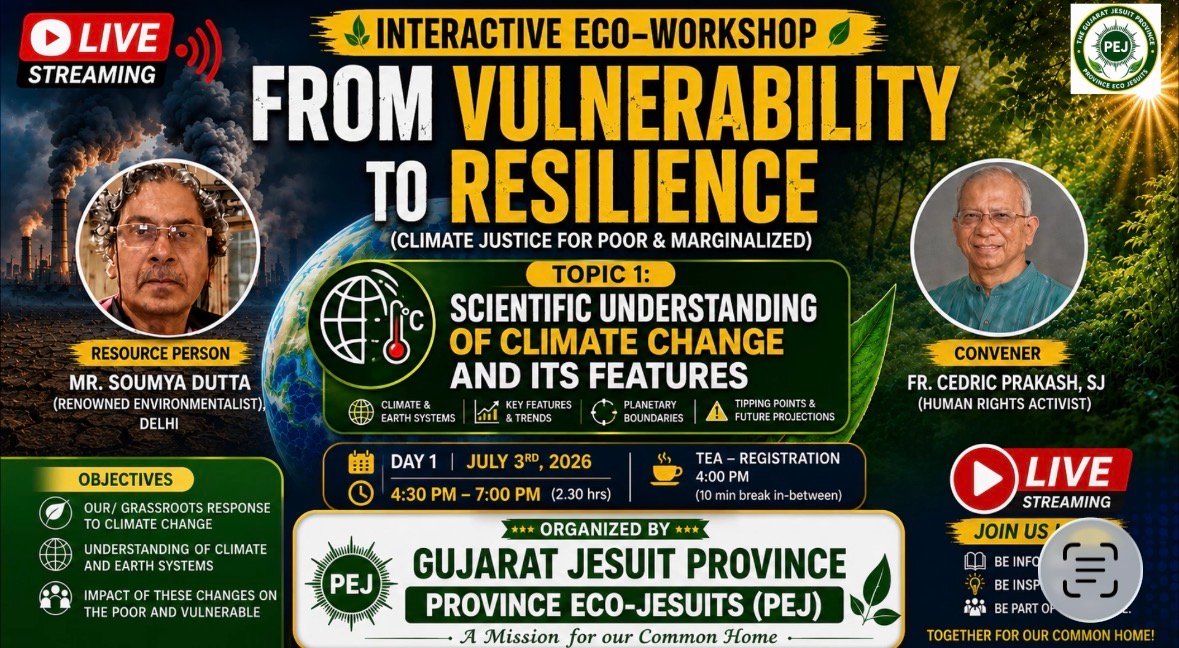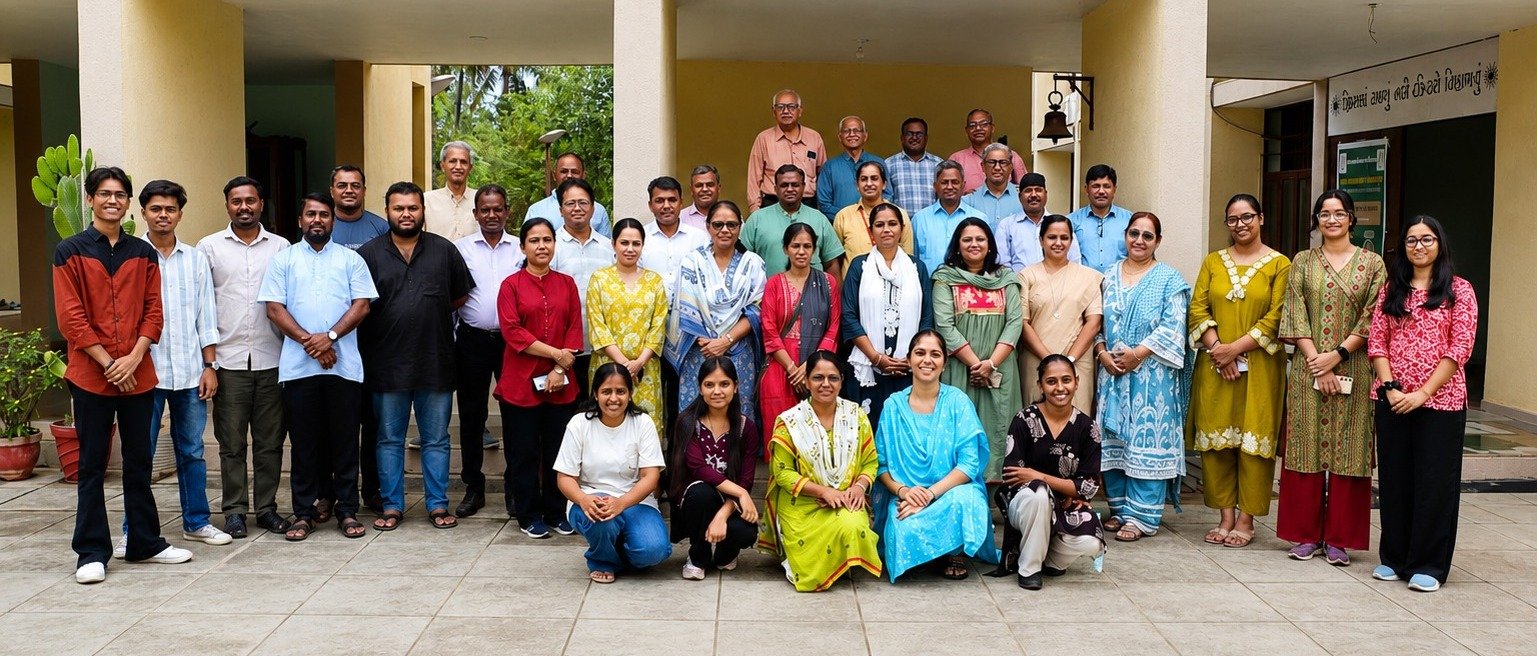
The Gujarat Jesuit Province Eco Jesuits (PEJ) successfully organized an inspiring interactive eco-workshop titled “From Vulnerability to Resilience: Climate Justice for the Poor and Marginalized.” The workshop at Sevasi, Vadodara, brought together Jesuits, religious, educators, social activists, students and committed individuals to reflect on the growing challenges of climate change and the urgent need for ecological action. 45 participants attended the programme, while more than 500 viewers benefited through the live YouTube streaming.
The workshop began with a warm welcome by Fr. Dr. Suresh, SJ Coordinator of the Gujarat Province Eco-Jesuits. He introduced the West Zone four-fold green initiatives: reducing fossil fuel consumption, promoting eco-awareness and eco-spirituality, advancing sustainable agriculture and natural resource management, and strengthening eco-research and eco-advocacy. He also guided the proceedings and encouraged participants to deepen their commitment to caring for our Common Home through informed action, collaboration, and sustainable practices.
Fr. John Kennedy SJ, South Asia Conference Coordinator for Ecology, reflected on the theme “Faith, Hope and Love in Protecting and Nurturing Our Mother Earth.” He emphasized that care for creation is a spiritual responsibility rooted in faith and expressed through hope-filled action and compassionate love for both humanity and the Earth.
Rev. Fr. Cedric Prakash, SJ, Convener of the workshop stressed that the climate crisis is not merely an environmental concern but fundamentally a question of justice, human dignity, and human rights. He called upon participants to stand in solidarity with the poor and marginalized, who continue to suffer the most severe consequences of climate change despite contributing the least to global carbon emissions.
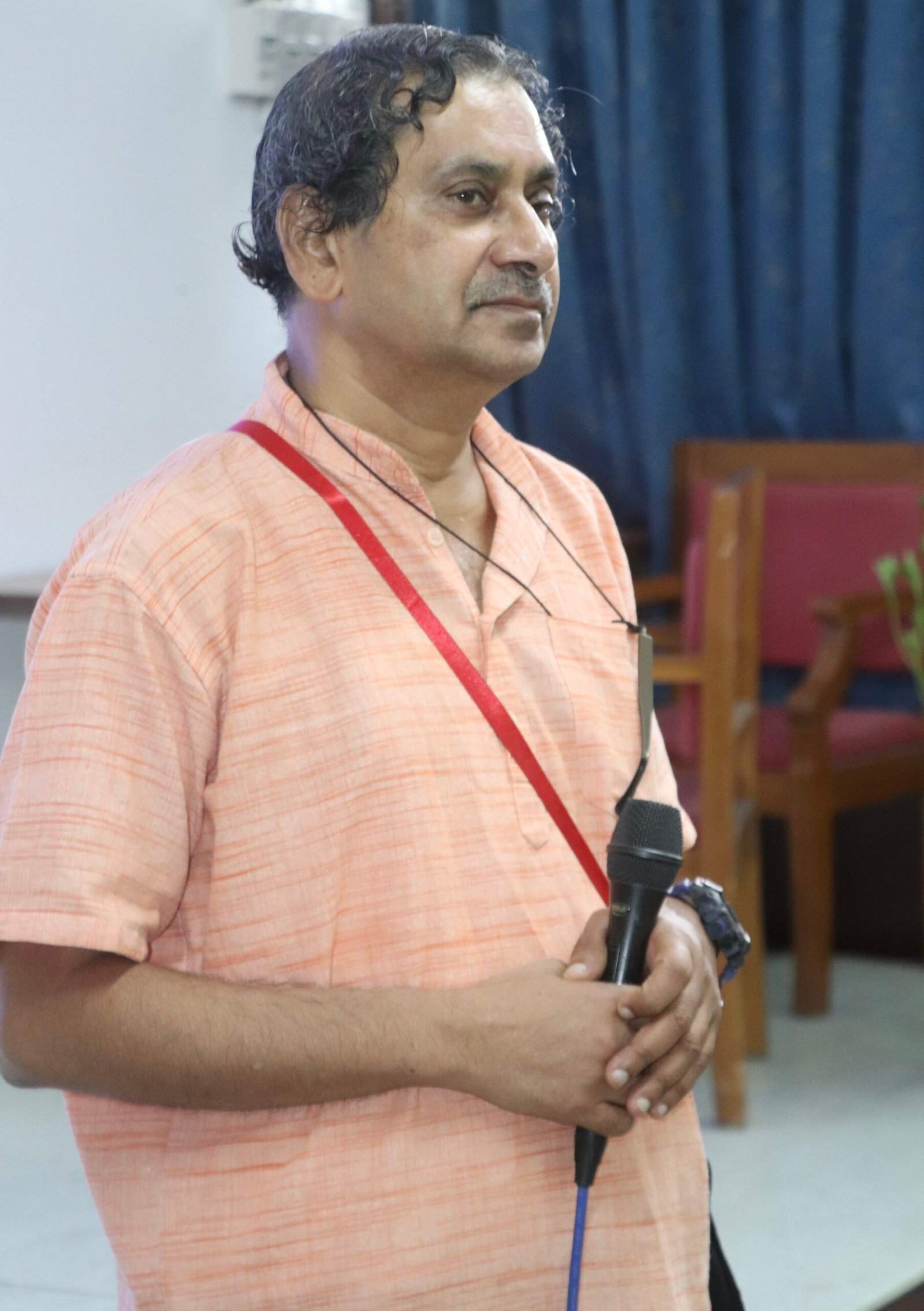
The keynote resource person, Mr. Soumya Dutta, a renowned environmentalist was welcomed and honoured by Gujarat Province Secretary Fr. John Kennedy SJ. Mr. Soumya provided a comprehensive and scientifically grounded presentation on climate change, its disproportionate impact on vulnerable communities, the principles of climate justice, and practical responses rooted in environmental stewardship. Through interactive discussions, group activities, and participant reflections, the workshop created an engaging platform for dialogue, learning, and collective discernment.
A central message of his presentation focused on protecting the poor and vulnerable from the devastating impacts of climate change. He explained that while rising temperatures receive considerable attention, relative humidity is an equally critical factor contributing to heat-related illnesses and fatalities. He emphasized that public policies and adaptation measures must address both temperature and humidity to safeguard human health. Particular attention, he noted, should be given to daily wage labourers and outdoor workers who endure prolonged exposure to extreme heat and humidity. Appropriate protective measures, workplace regulations, and community support systems are essential to reduce these risks.
Mr. Dutta further stressed that meaningful mitigation of climate change requires a drastic reduction in fossil fuel consumption. He urged governments, institutions, and individuals to adopt bold and effective measures that promote renewable energy, sustainable lifestyles, and climate-resilient development. Addressing climate change, he emphasized, demands immediate, coordinated, and long-term action at every level of society. Fr. Frazer, SJ the western zone coordinator for Ecology urged the participants to make the mission of cutting down fossil fuel consumption as the utmost priority.
Participants greatly appreciated the opportunity to exchange ideas, strengthen their ecological awareness, and explore practical ways of integrating care for creation into their personal, social, and institutional lives. The workshop served as a common platform for developing practical action plans to protect the Earth while safeguarding the dignity, well-being, and livelihoods of the poor and vulnerable.
The programme concluded with a renewed commitment among all participants to work collaboratively for environmental justice, sustainable development, and the protection of our Common Home. It reaffirmed the Gujarat Jesuit Province’s unwavering dedication to promoting ecological responsibility, climate justice, and social transformation.
“Together, for Our Common Home.”